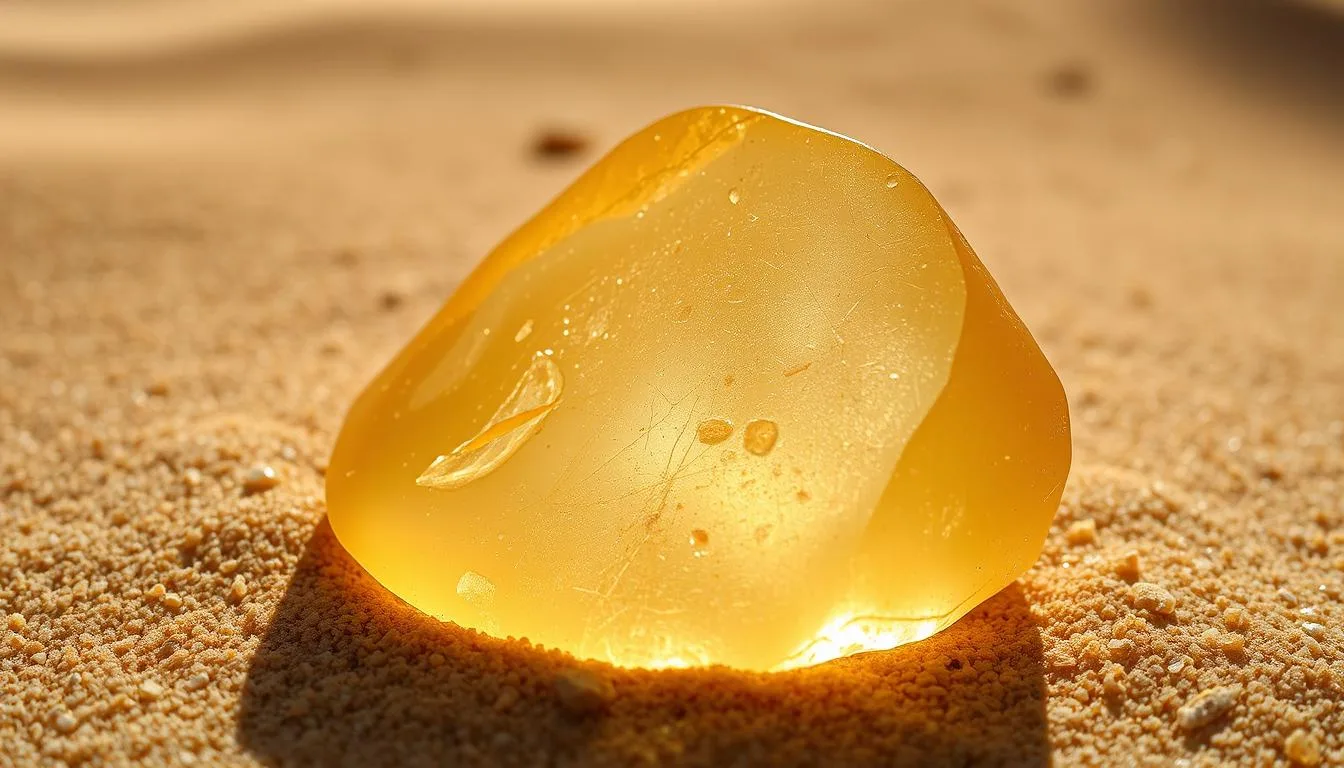
The Libyan Desert Glass is a yellowish-green glassy substance found in the Libyan Desert. Scientists have been trying to figure out where it comes from. Many think it might be a meteorite. We will look into if Libyan Desert Glass is indeed a meteorite and share interesting facts about it.
We will dive into the characteristics and properties of Libyan Desert Glass. We will discuss different theories about its origin. The debate about whether it is a meteorite or not is ongoing. We will explore Libyan Desert Glass facts and examine the ongoing debate.
Key Takeaways
- Libyan Desert Glass is a mysterious, yellowish-green glassy substance found in the Libyan Desert.
- The origin of Libyan Desert Glass is still unknown, with one theory being that it is a meteorite.
- We will explore libyan desert glass facts to understand its characteristics and properties.
- The question of is libyan desert glass a meteorite? is still debated among scientists and researchers.
- Libyan Desert Glass has unique properties that set it apart from other natural phenomena.
- We will examine the various theories that attempt to explain the existence of Libyan Desert Glass.
Understanding Libyan Desert Glass: A Natural Wonder
We are intrigued by the Libyan Desert Glass. Its unique features have caught the attention of scientists. The glass’s high silica content and lack of water make it fascinating to study.
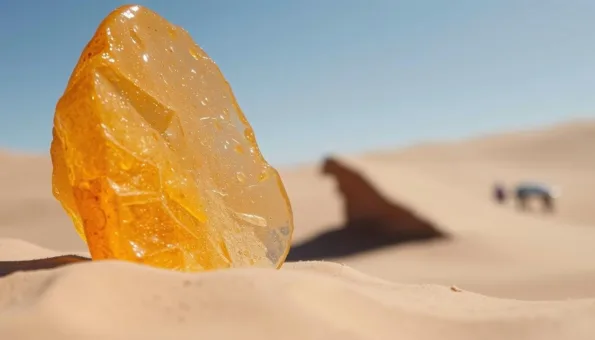
The glass is found in the Libyan Desert. It has a distinct yellowish-green color. It comes in various shapes and sizes, from small fragments to large pieces.
Physical Characteristics and Appearance
The Libyan Desert Glass has a smooth, glassy texture. It has a conchoidal fracture pattern. Its appearance is shiny and translucent, with colors ranging from yellow to green.
Geographic Distribution
The glass is only found in the Libyan Desert. The largest pieces are in areas with little vegetation. This suggests it was formed by high temperatures and intense energy.
Historical Significance
The glass has historical value. Ancient cultures prized it for its beauty and rarity. Today, researchers study it to understand its origin and properties.
| Property | Description |
|---|---|
| Color | Yellowish-green |
| Texture | Smooth, glassy |
| Fracture pattern | Conchoidal |
The Unique Properties of Desert Glass
We will explore the special features of Libyan Desert Glass, focusing on its makeup. This glass is mostly silica, with very little else. This makes it stand out from other natural glasses worldwide.
Some key traits of Libyan Desert Glass include:
- High purity, with minimal impurities
- Unique libyan desert glass composition, primarily made up of silica
- Different from other natural glasses, which often contain higher levels of impurities
Scientists think a meteorite impact might have formed Libyan Desert Glass. Further research is needed to confirm its origin.
Studying Libyan Desert Glass’s composition helps us understand its origins. It also sheds light on how other natural glasses form. This knowledge is crucial for learning about the conditions needed to create them.
Is Libyan Desert Glass a Meteorite? Examining the Evidence
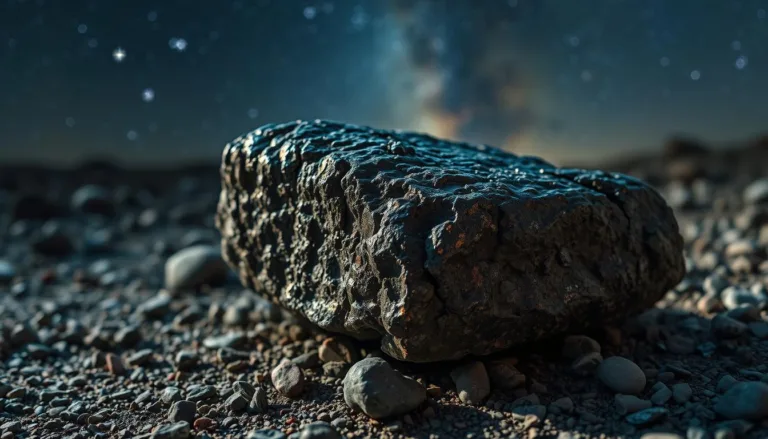
We’re looking into whether Libyan Desert Glass is a meteorite. Scientists have studied its chemical makeup, revealing clues about its origins. The debate between Libyan Desert Glass being a meteorite or not has caught a lot of attention. Some believe it came from a meteorite impact, while others suggest other ways it could have formed.
The formation of Libyan Desert Glass is still a mystery. By analyzing its chemical makeup, researchers found some similarities with meteorites. Yet, there are also clear differences. These differences include:
- Different chemical composition
- Unique physical properties
- Distinct geological context
These differences have led some to suggest other ways it could have formed. For example, volcanic activity or sand interacting with high-energy particles. On the other hand, the impact theory suggests it was made by a meteorite hitting the Earth. This would have created the high temperatures and pressures needed to make this glass.
As we keep studying Libyan Desert Glass, we might find more clues about its origins. For now, the debate continues. Each theory has its own points and weaknesses. By looking at the evidence and weighing each theory, we can better understand where Libyan Desert Glass came from.
| Theory | Description |
|---|---|
| Impact Theory | Libyan Desert Glass was formed as a result of a meteorite impact |
| Volcanic Activity | Libyan Desert Glass was formed as a result of volcanic activity |
| High-Energy Particles | Libyan Desert Glass was formed as a result of the interaction of sand with high-energy particles |
Scientific Research and Modern Discoveries
We are still trying to figure out Libyan Desert Glass through scientific research and new findings. Advanced tools like spectroscopy and electron microscopy help us study it in great detail. This lets us see its makeup and structure like never before.
Recent libyan desert glass scientific research has uncovered some important facts. These include:
- Chemical analysis shows unique patterns and signatures
- Structural studies suggest how it might have formed
- Comparing it with other natural glasses helps us understand its origins
As scientists keep studying Libyan Desert Glass, they might find more clues. This could help solve the mystery of where it comes from. The use of libyan desert glass scientific research and modern tech opens up new ways to learn about it.
Through ongoing scientific research and teamwork, we aim to learn more about Libyan Desert Glass. We want to understand its possible links to meteorite impacts or other theories. By looking at the latest research and findings, we can better grasp this intriguing substance and its role in nature.
| Research Method | Findings | Implications |
|---|---|---|
| Spectroscopy | Unique chemical signatures | Indicates potential meteorite impact |
| Electron Microscopy | Structural analysis reveals formation processes | Provides insight into origins of Libyan Desert Glass |
Applications and Cultural Significance
We will explore the uses and cultural importance of Libyan Desert Glass. This material has been valued for its unique look and properties. It has sparked curiosity, making it interesting for various uses.
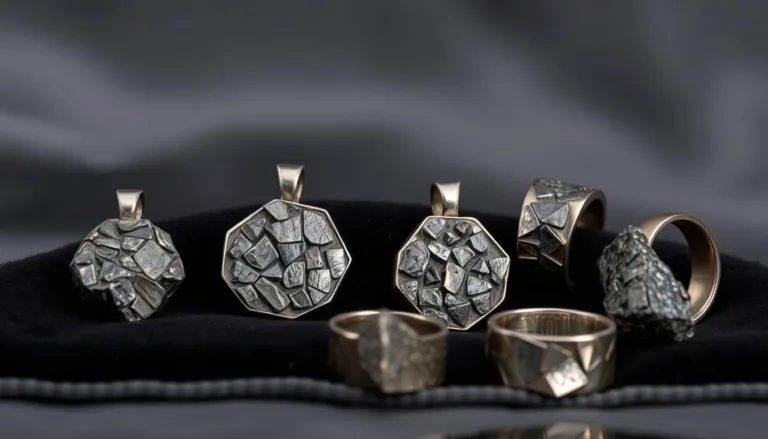
Libyan Desert Glass is often used in jewelry and decorative items. Its special color and texture make it highly sought after. Here are some of its notable uses:
- Jewelry making, where it is often used as a centerpiece or accent stone
- Decorative objects, such as vases, sculptures, and other ornaments
- Archaeological findings have also revealed that Libyan Desert Glass was used by ancient civilizations, which considered it a sacred and powerful material
In modern times, Libyan Desert Glass is used in industrial settings. It’s used to make special glasses and ceramics. The mysteries surrounding its origins and formation continue to fascinate us.
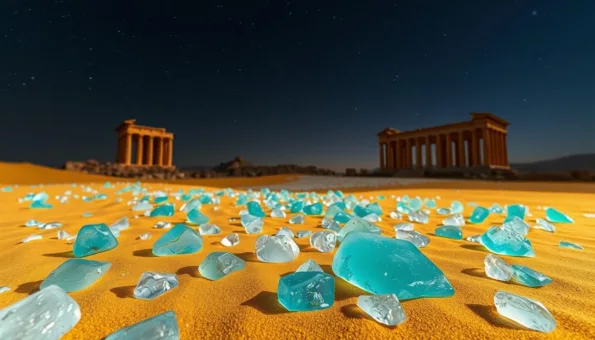
By looking into its uses and cultural value, we can better understand this mysterious material. The study of Libyan Desert Glass is ongoing. New discoveries and research help us learn more about it.
| Application | Description |
|---|---|
| Jewelry making | Used as a centerpiece or accent stone |
| Decorative objects | Used in vases, sculptures, and other ornaments |
| Industrial applications | Used in the production of specialized glasses and ceramics |
Conclusion: Unraveling the Desert Glass Mystery
As we wrap up our journey into Libyan Desert Glass, it’s clear that it’s still a big mystery. Scientists and fans are still arguing about where it comes from and how it’s made. We’ve looked at many theories and evidence, which has helped us understand it better.
Even though we don’t know for sure where Libyan Desert Glass comes from, it’s undeniable that it’s special. It has caught the attention of people everywhere. By keeping up the research, we might find out more about how it was made and what forces created it.
The mystery of Libyan Desert Glass shows us how amazing our world is. As we learn more, we see how important it is to keep exploring and discovering. So, let’s keep exploring the desert glass mystery and uncover its secrets.